
Dad's war
Desert sores

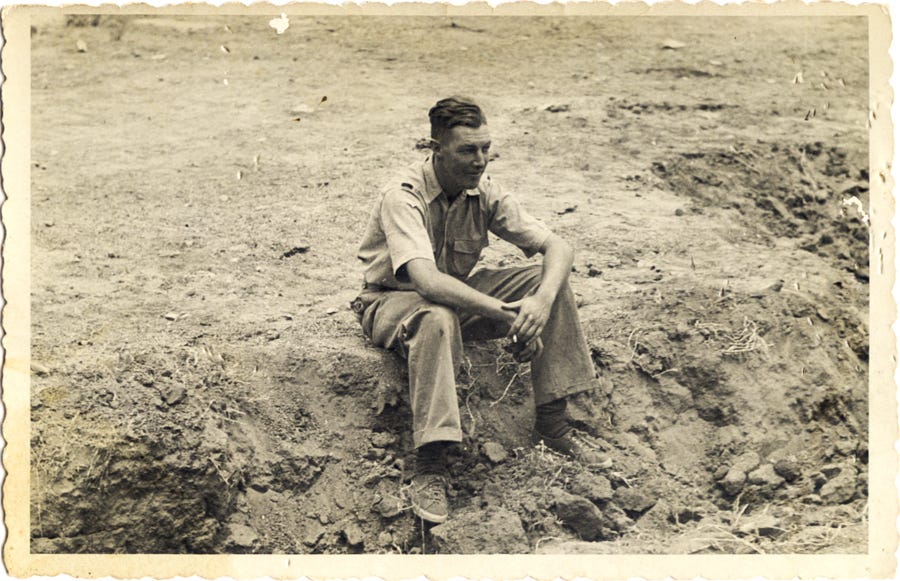
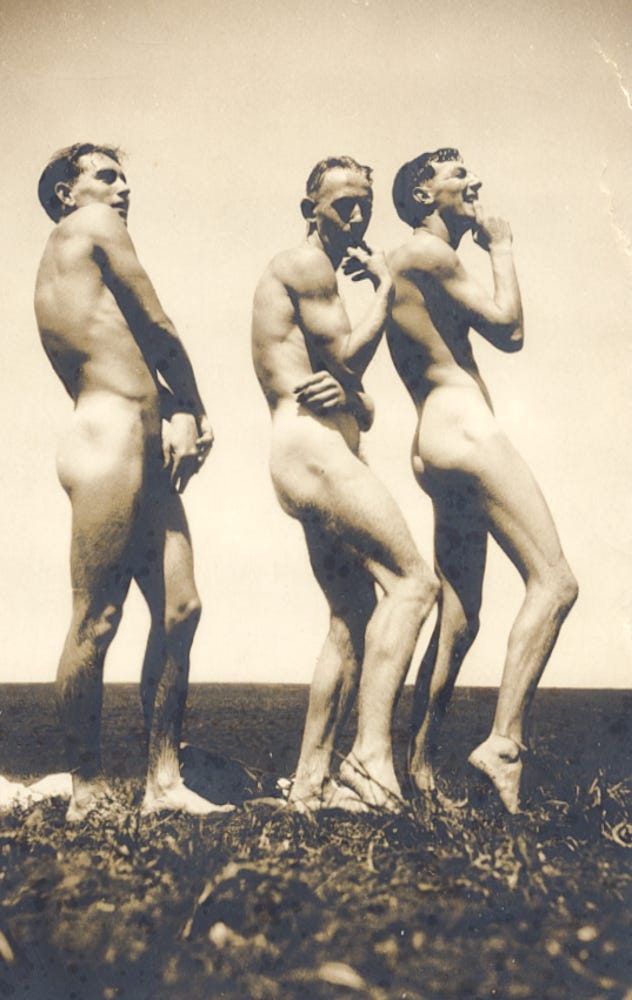
Mum said never to ask Dad about the war. My brother and I once found some medals in a dusty old box but we never mentioned it. There was also a battered album with postcards of crumbling African cities and faded photographs, taken in the desert by my father. My favourite was the one of dad and his two friends prancing naked in a grassy field, having a lot of fun.
Apart from two anecdotes, my father never talked about the war.
Anecdote 1: They were in the desert and there was only one shaving brush in the camp. Unfortunately, it was swallowed by an ostrich: you could see it sliding down the ostrich’s long neck in a shaving-brush-shaped lump. My clever dad and his friend Norman got it back by squeezing the neck below the lump, as one would to get toothpaste out of a tube.
Anecdote 2: There were only two trucks in the desert. One day dad and Uncle Norman were driving them around like dodgem cars and they had a crash.
My mother’s two stories about the war were a little different to his. The first concerned a letter she received, which said that dad, then her fiancé, had been injured and was being repatriated. She was called to an office in town and while she waited anxiously for news, the woman sitting next to her offered her a cigarette, thus beginning her lifelong career as a chain-smoker. The second story involved an incident that made her very angry. After dad’s return from the front, they were out shopping in town when a lady gave him a white feather. She was handing them out to all the men shopping that day.
My sister also had an anecdote, but it was only as an adult that she realised it was a war story. One night, during a violent thunderstorm, she ran into the parents’ bedroom for comfort and saw our father under the bed. Our mother said she was to forget what she had seen and never tell anyone.
In 2008 I requisitioned my father’s war records and discovered that he had served for four years in the East and North African campaigns. He signed up as a bright-eyed 21-year-old (medical category A) in December 1939, a volunteer, and was posted to the First Field Company of the SA Engineers Corps. The sappers, as the engineering unit was known, were trained for six months before leaving for Mombasa. Their initial role was to establish a base for the soldiers that were to follow. Then they prepared the route across the desert that separated Kenya from Italian Somaliland. They built roads and bridges and dug wells in terrain where the sand crumbled to dust under the wheels of the tanks and the temperatures soared to over 43 degrees.
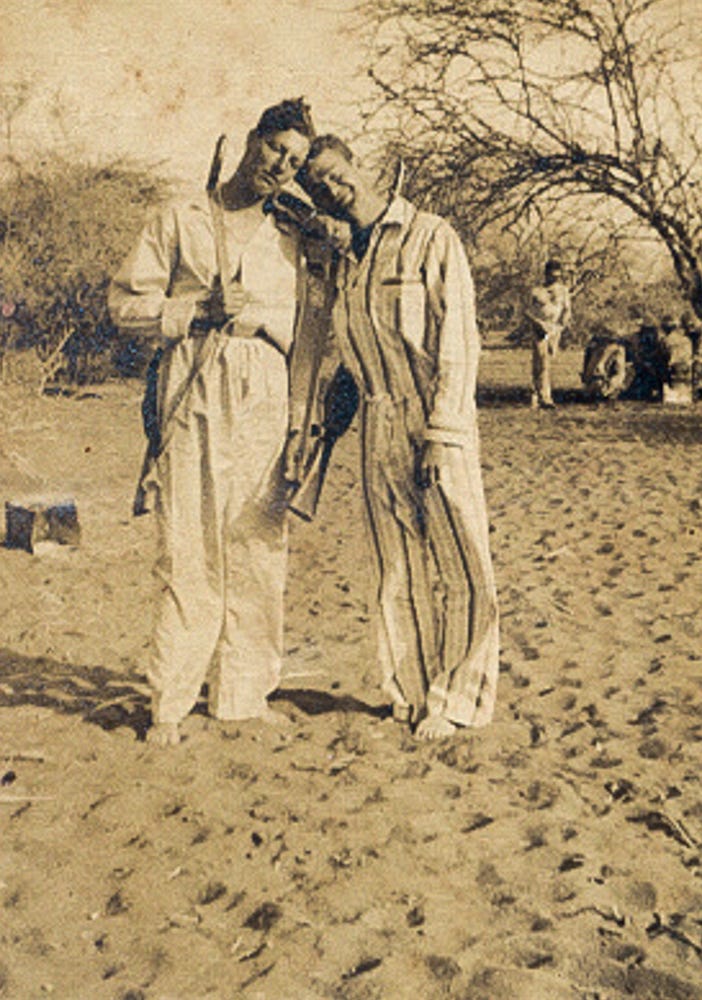
By July 1941 First Field, had been transferred to north Africa to join the Allied Forces fighting to relieve the Siege of Tobruk. Dad found himself in the landmine division. The high-spirited desert snapshots would come to an end.
German S-mines were strewn across their route. The Bouncing Betty was designed to maim rather than kill. Limbs and genitalia were the most vulnerable. Little horns emerged from a buried metal cylinder filled with shrapnel. Without mine detectors, which were in short supply, they were hard to spot.
Towards the end of November, intense fighting had begun. An entire South African Infantry Division was lost. By early December, First Field were destroying hundreds of antipersonnel mines that lay in the path of the advancing Allied force - while under daily air attack.
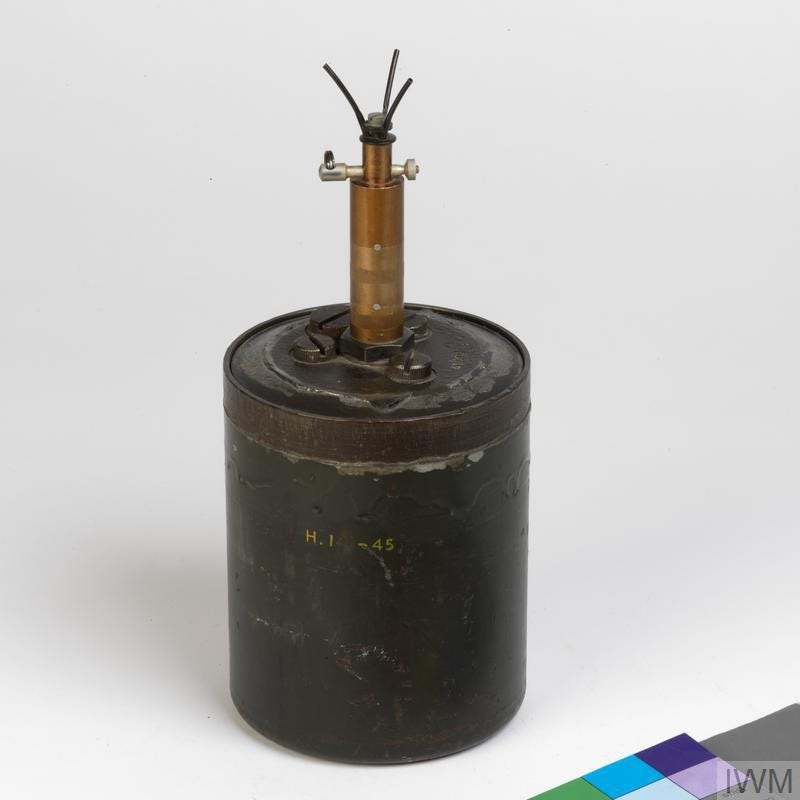
Bouncing Betty. Image IWM (MUN3318)
A month of this, and my father was hospitalised with “NYDN”, a military abbreviation for Not Yet Diagnosed, (Nervous). This term was coined in World War 1 for what was then called “shell shock”, or post-traumatic stress disorder. If no alternative diagnosis was found in three weeks, soldiers were referred for psychiatric help. My father’s hospital records show he was diagnosed with dyspepsia and discharged back into his unit within three weeks.
Ten months later, First Field would face their greatest test: to cut a route through the enemy minefield that obstructed Tobruk, known as Devil’s Garden. The gap had to be over seven metres wide to allow two tanks to pass.
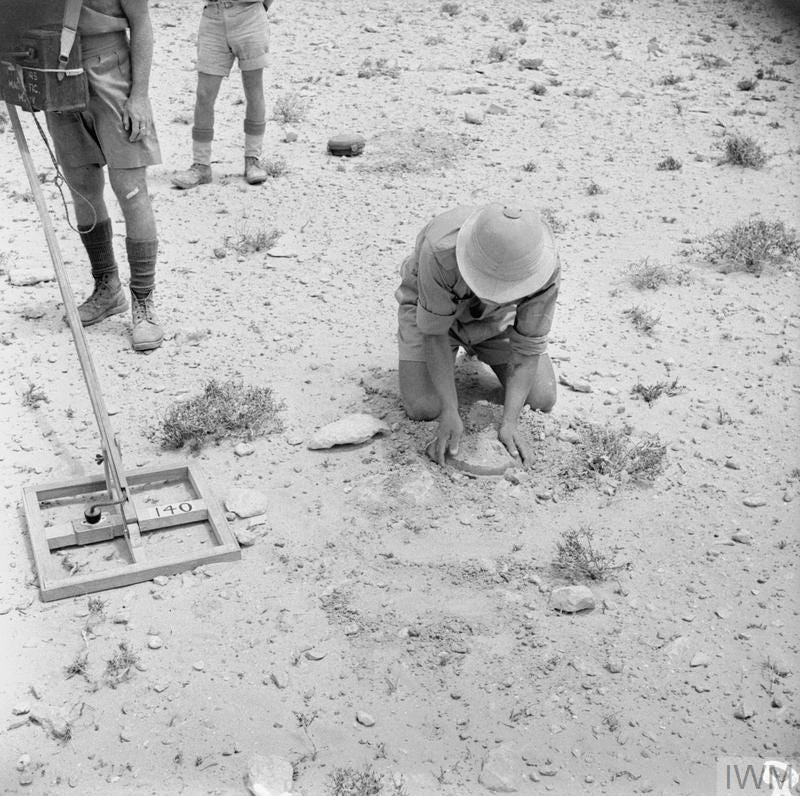
SA Engineers clear a German minefield in the German desert. Image IWM E15172)
This is how it was done. A small recce party went ahead, reeling out white tape to mark the centre line of the gap. They used a blue light to mark the beginning of the minefield. Their best guess, that is. Then stooping low so that their fingers almost touched the ground a row of men advanced, feeling for trip wires and searching for the horns of the S-Mines. On reaching the other side they planted another blue light.
The mine-clearing party followed. The detector men swept the ground to locate any mines and marked each one they found. They were followed by sappers who would lift the mine by lying flat on the ground next to it and carefully scraping away the desert sand with their fingers. Mines were laid to the side, and the edges of the gap were fenced.
This agonising crawl through the sand took two days and nights but was accomplished with only three men slightly wounded. My father received a finger injury but remained on duty. After the troops had passed and the battle of El Alamein begun, First Field continued clearing mines.
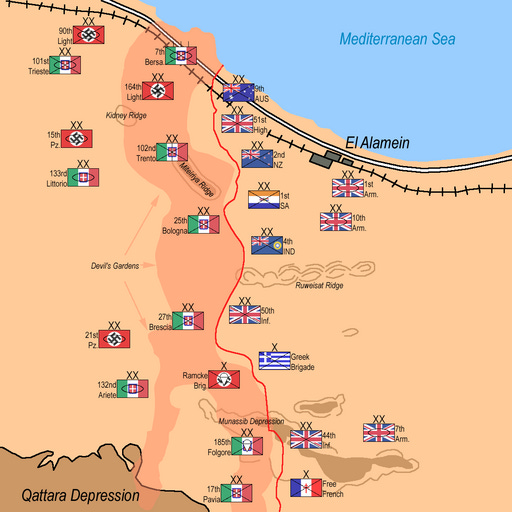
Second Battle of El Alamein showing devils gardens in pink and position of Ist SA Engineers. Wikimedia commons
Conditions in the desert were increasingly harsh. On the eve of the main battle, one soldier wrote that the desert was quivering with heat, and soldiers squatted in their trenches with sweat running in rivers down their dust-caked faces. “There was a terrible stench. The flies swarmed in black clouds upon the dead bodies, and excreta tormented the wounded. The place was strewn with burning tanks and carriers, wrecked guns and vehicles, and over all drifted the smoke and the dust from bursting high explosives and from the blasts of guns.”
My father was among the many who suffered skin sepsis in these unsanitary crowded conditions. During the North Africa campaign, sores were common on arms and legs exposed to dust, wind and sun. In time, they filled with pus and spread into the deeper layers of the skin where they ulcerated and caused systemic illness. Military medics had by now discovered a protective cream, but it was impossible to get this to the front. Towards the end of the battle of El Alamein dad was hospitalised for several weeks with ecthyma, or desert sores.
It was soon after the relief of Tobruk that dad’s division shipped back to South Africa. He was granted leave and took the opportunity of marrying my mother in May 1943. Within a few months she was pregnant with my sister.
After this, my father’s military records run into the sand. It seems that while others in his unit went on to fight in Italy, he remained at base in South Africa. However, his health problems were not over. The dyspepsia caused by the stress of the minefield turned into a full-blown duodenal ulcer for which he was hospitalised yet again. Within two weeks he was given a medical discharge.
So, this was the tale of how my funny, clever, brave white-feather dad went into the army Category A1, perfect and ready to fight, and like many of his generation, emerged Category E, “permanently unfit”. Age 26, his youth was over. He went on to a series of uninspiring jobs, fathered two more children and was dead from lung cancer in 19 years.
Thank you for reading. The version on my website contains references. If you enjoyed this you can subscribe free by clicking on the button below.
Absolutely heart-breaking and how difficult it must have been to write.