
Eternal light
From slavery to a modern fairy tale

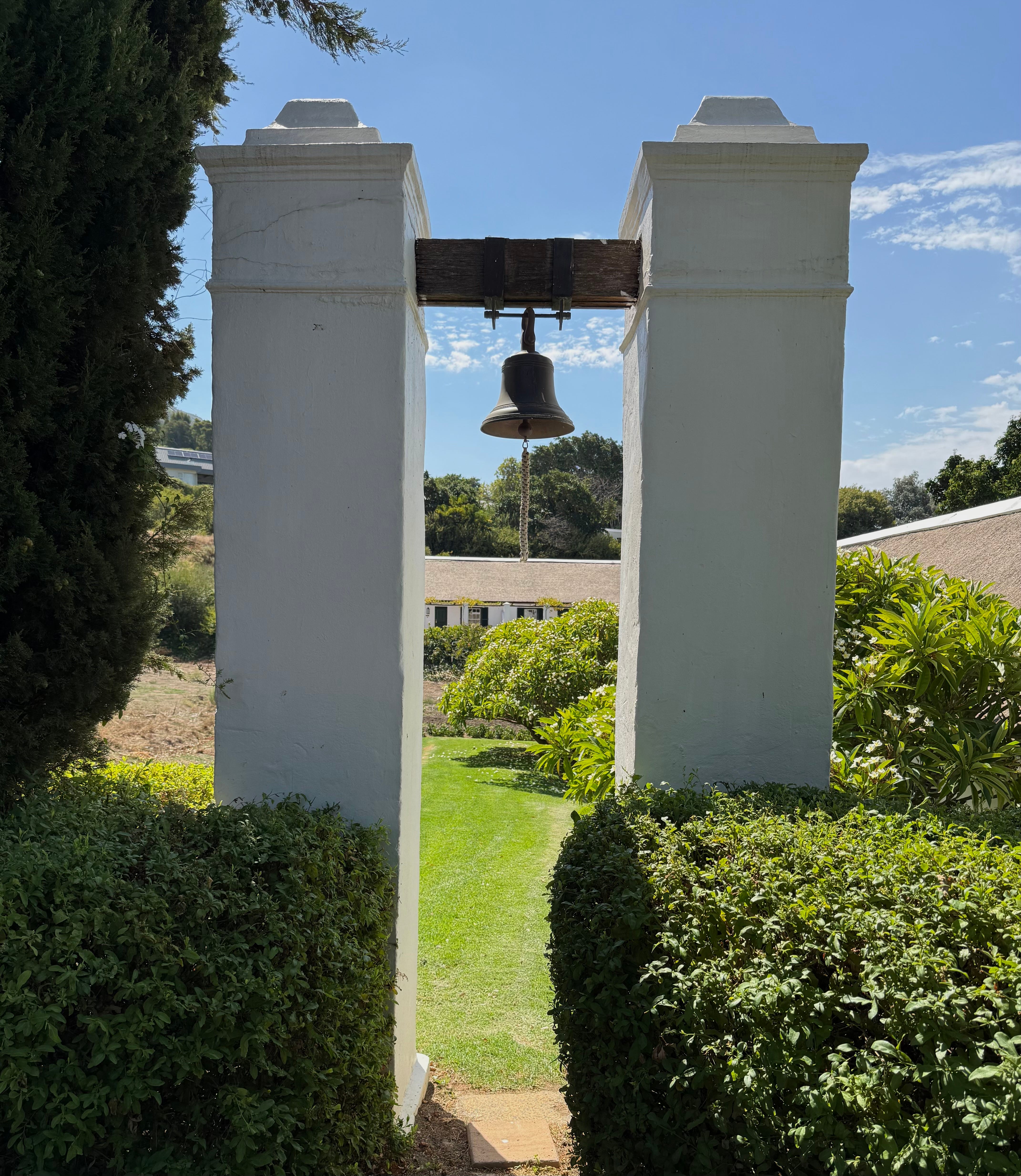
Slave bell, Grande Roche, March 2026, Lesley Lawson.
In 1995, while directing a documentary series on the Christian missionaries in South Africa (God Bless Africa), I visited a chapel in the grounds of a five-star hotel outside Paarl, which was being used as a venue for intimate, upmarket weddings.
[I am mindful of the debates around language on this vexed topic. The term “slave” is demeaning and objectifying, and many prefer to use the term “enslaved people” as an alternative. In this piece I mainly follow common South African usage, and have stayed with “slave,” which I hope does not offend other readers.]
Going to the chapel
This location had been suggested by the late historian Prof Henry Breedenkamp who wished to be interviewed in the only surviving slave chapel in the Cape. He told us that the 18th century owner’s effort to Christianise his slaves made him something of an outlier in his community—Cape farmers seldom baptised their slaves on the tautological grounds that Christians are free men, and free men cannot be slaves.
The interior of the chapel was simple, adorned only with flower arrangements for the next wedding. As he strode about, Bredenkamp could not conceal his indignation: that a man of God would participate in slavery. Unthinkable. He speculated that, as well as being a place of worship, the slave chapel was also likely to be a meeting place for slave and master. “I assume that, at the time, the bell outside was not so much to call them to service but to call the slaves to work.”
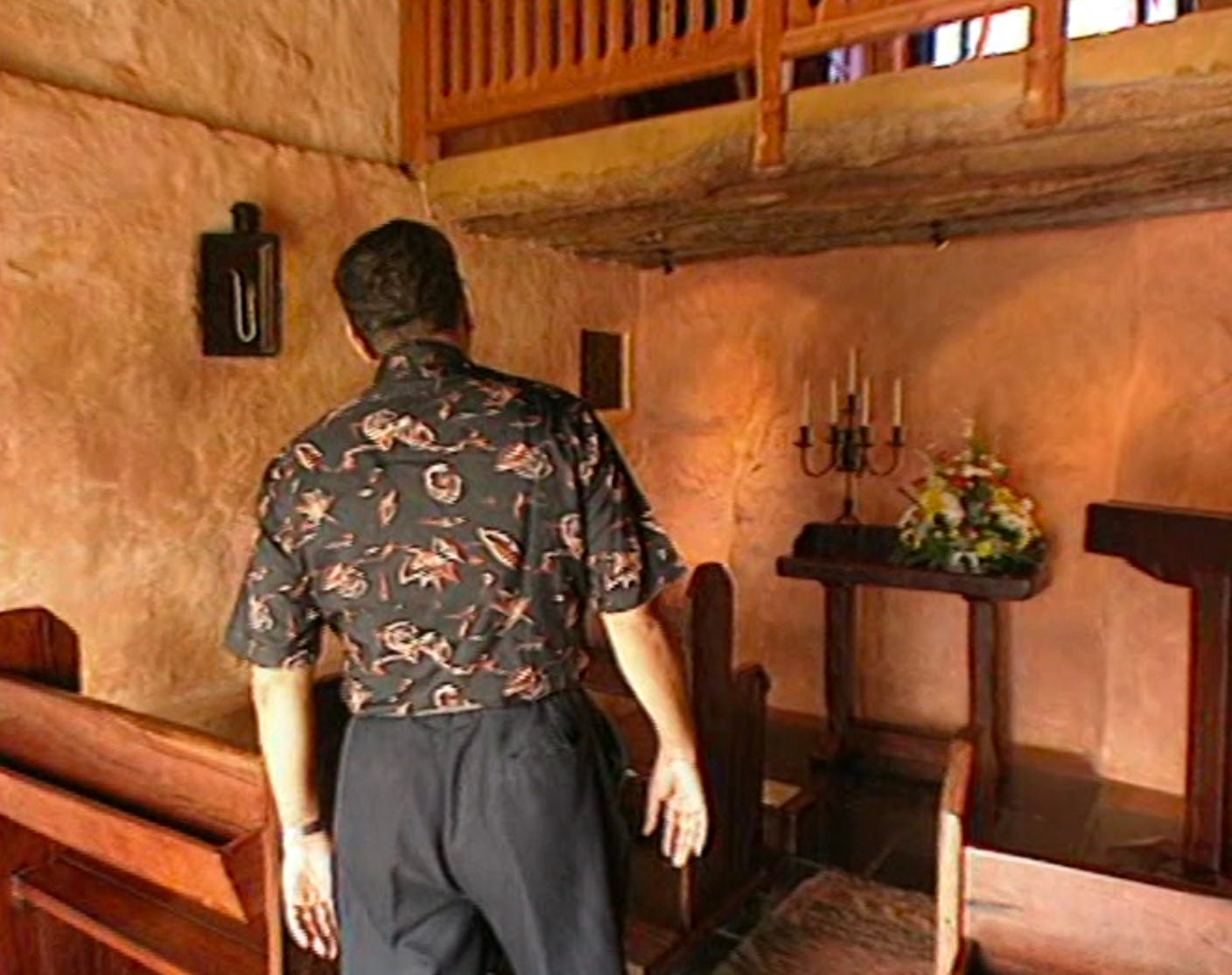
Prof Henry Breedenkamp exploring the Grande Roche slave chapel. Film still, 1995.
Many years later, flicking through Karel’s Schoeman’s newly-published book, Cape Lives of the 18th Century, I realise that this chapel was built in 1737 by none other than my fifth great-grandfather Hermanus Lambertus Bosman. At the time of filming, I was blissfully ignorant of my ancestry, not even knowing the names of my maternal grandmother (Johanna Petronella Bosman). And although ignorance is no excuse, in this instance I remain grateful for it.
The records show that Hermanus and Elizabeth bought their first slave, Aaron of Bengal, from Francois Retief for 90Rds (Rix dollars, just over $1) on 12/5/1709, around the time that their first child was born. At his death, Bosman owned thirteen slaves, ten men and three women. This considerable number marked Bosman as a wealthy man in a neighbourhood where ownership of five slaves was the norm.
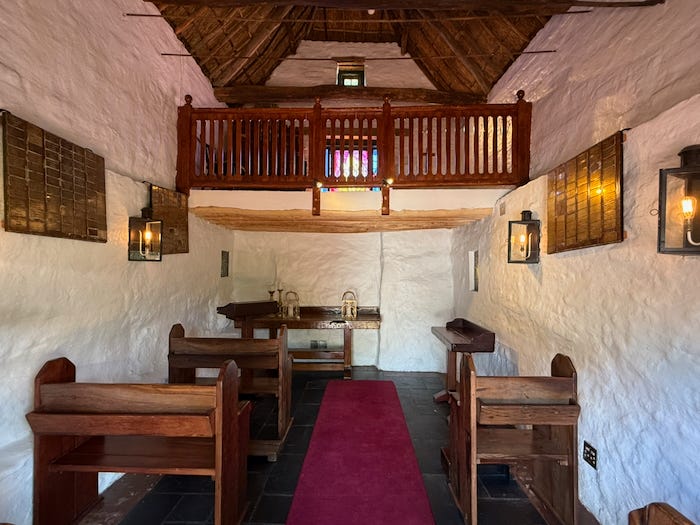
Slave chapel interior, Grand Roche Hotel. Photograph Lesley Lawson, 1996.
Slavery in the Cape
Ironically slavery was illegal in Holland, and the Dutch East India Company (VOC) forbad enslaving local people in their colonies. But it was fine to buy and sell slaves, as long as they were brought from other parts of Africa, India and the East. Indeed, the sparsely populated colony depended on the unpaid labour of slaves who outnumbered the colonists.
The position of the Dutch Reformed Church on slavery was vague. It was generally understood that the Church expected slave children to be baptised, and that baptised slaves should not be sold, but this was not a common practice.
The VOC, however, was clear that the children of slaves should be baptised, and this was the case for all the Company slave children who were born in the Slave Lodge, which they ran. Being a Christian meant that the enslaved person was part of the Christian commonwealth and had the right to marry and inherit property, while remaining enslaved. But the private slave owners were reluctant, fearing that Christian slaves would have more rights than so-called heathens. An additional deterrent was that baptising slaves came with the obligation to provide a Christian education. Christian slaves came to be seen as less valuable, and over time slave baptisms outside of the VOC were increasingly rare. In 1721 even the ministers of Cape Town, Stellenbosch, and Drakenstein pushed back against the Cape’s policy of baptising the children of slaves.
This meant that few slaves were baptised, making Hermanus Bosman an exception in his community.
When he died his slaves were passed on to his heirs with an amount of money for their upkeep. They were no longer regarded as assets, and neither could they or their children be bought or sold.
In these early days Christianity had little appeal for enslaved people, who saw it as the religion of the oppressor. Many embraced Islam instead, which supported marriage and consoled people with the idea that they would be free after death.
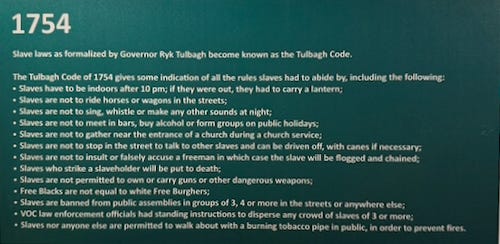
The Tulbagh Code of 1754 formalised previous rules. Slave Lodge, Cape Town, 2026.
Eternal light
Hermanus Bosman died at the age of 87 years, after a nine-month illness during which he was cared for by his children. His daughter, Elizabeth wrote that he bore his last days with equanimity, buoyed up by a constant stream of pious thoughts and quotations from the scriptures.
“Often he would have the window opened,” she wrote, “and when he was asked whether he could bear the light he replied ‘Oh I love to see that precious sunlight, I am a lover of light and not of darkness, my God will be my light in all eternity. I hope that I may enjoy forever that adorable light on which no night will follow, in that city where we will no longer have need of the light of candle, sun or moon because the glory of God and of the Lamb will be our light and the Sun of Justice will be my eternal light.’”
Bosman’s will provides an insight into the lives of affluent families of the day. The five-roomed house was well-furnished and had glass windowpanes, though cooking was done over an open fire and water brought in from an outdoor source. In the cellar there were quantities of red and white wine, brandy and vinegar, as well as two wine presses and a brandy still. The farm had accumulated 33 bags wheat, 25 oxen, and 230 sheep and goats.
According to the will, there was a separate a slave house on the property, but its contents show it was used for storing tools and preparing food. Fish and rice were part of the basic diet of enslaved people. At the time, female slaves in the Cape would have brought their bedding into the kitchen or into the wife’s room to sleep at night. Male slaves would sleep in other outbuildings.
Schoeman describes the background of Bosman’s slaves: six were locally born, three were from the east (India, Bengal and Bangladesh), three from Madagascar, and one from Mauritius. Six had conventional Dutch names (Arij, Philip, Jan, Juliana, Marie and Lijs). The others were named from characters in the bible or classics (Jeptha, Jason) or given common slave names (Januarie, Fortuin, Oranje). Only Jasmyn and Paviljoen had unusual names.
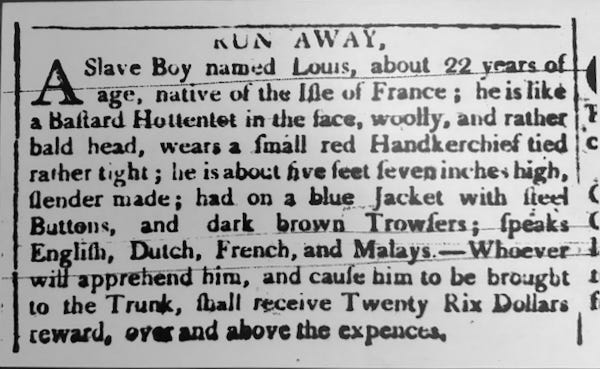
18th century newspaper cutting, Slave Lodge. Cape Town, 2026.
Given the lack of documentary evidence to the contrary, we may assume that the Bosmans’ slaves were not mistreated (apart from being enslaved, that is). But the same cannot be said of the slaves of the minister who Bosman assisted. Three of Minister van Echten’s slaves absconded to join a band of runaways, and on capture two were scourged, branded and sentenced to serve in chains for ten years. The third was put in the pillory and then chained for 10 years. So, in the period while Hermanus was sick comforter there were no less than three slaves in chains in the parsonage. (The leader of those refugees was sentenced to death by impalement.)
In 1754, after Bosman retired, five slaves belonging to van Echten’s successor absconded and when captured, were put to death. The two leaders were broken on the cross, one was hanged, one was pilloried scourged and branded, and one strangled. Schoeman remarks this must have meant a considerable (financial?) blow for the minister.
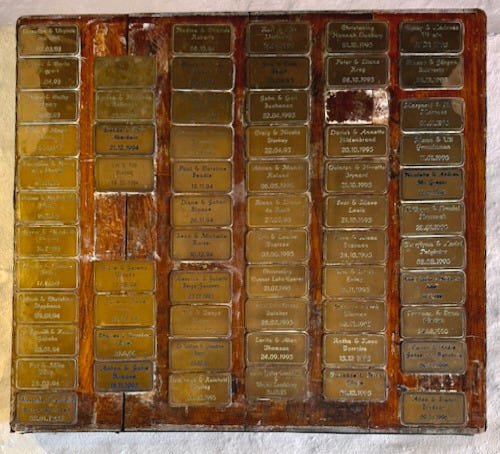
Plaque commemorating weddings, Grande Roche chapel. Photograph Lesley Lawson, 2026.
Returning to the chapel
Thirty-one years after my first visit I return to my ancestor’s slave chapel. Little has changed. It sits still in the luxurious heat-washed grounds, the open door bearing a framed plaque memorialising, not the slaves, but the young people who celebrated their marriages there.
The narrative, however, has shifted slightly since 1995. The building is now described as a former mill, which “according to folklore was used as a chapel by slaves, (all of whom became Christians).”
The website too has dropped the word slave from its description of the chapel, describing it as “the perfect place for small intimate weddings or vow renewals. Set in the garden under the watchful eye of an ancient oak tree, it recreates a modern-day fairy tale. With seating for up to 12 guests, gather your closest friends and relatives and soak up the historic sensation.”
Thank you for reading. If you enjoyed this please subscribe by clicking on the button below. Subscription is free and always will be. References are available in the version on my website.
What an interesting story!