
Missing Pieces coda
Who am I?

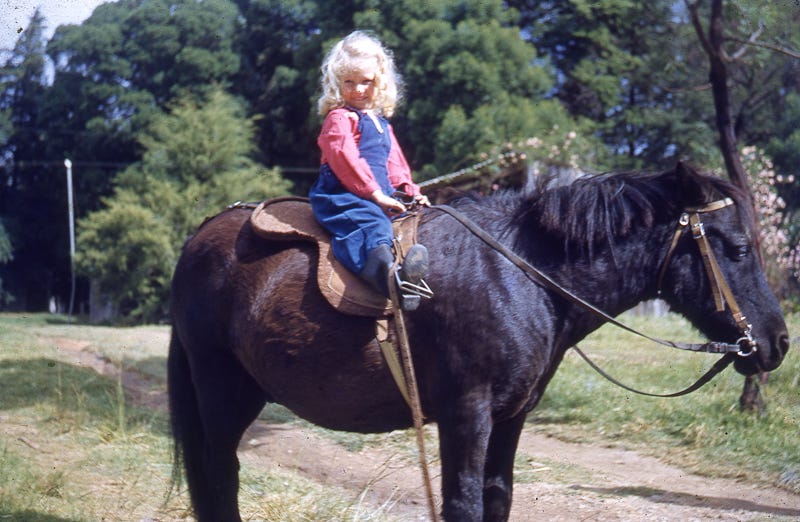
Lesley Lawson, Drakensberg resort. Photo Hector Lawson, circa 1956.
Nearing the end of my family story I was still procrastinating over one last venture: an ancestry DNA test. This would enable me to confirm the practical questions about my heritage, though not necessarily the existential ones. So it was, with some trepidation, that I sent a sample of my cheek scraping to a well-known family history site used by many South Africans.
In the genes
A few weeks later I learn that my genetic make-up is as follows:
29.9% English
25.3% Ashkenazi Jewish (mostly Lithuania, some Polish and Belarus)
12.5% Dutch
9.0% Scottish and Welsh
9.0% Breton
6% Germanic
5.5% French
2.8% Danish
Disappointingly, all my ancestry is European, not a scrap of indigenous or slave genes to be found. This was unexpected, because in the early days of the Cape colony relations between enslaved women and male settlers was not uncommon. The gender converse was rare, although Aletta Deny’s great-aunt did get permission to marry a freed slave Christoffel Snijman (Snyman) when they were both underage.
So: I am 100% European, though a quarter of that comes from the Lazarus ancestors of Eastern Europe. I have been puzzling over the fact that the ancestry site described that fraction as Ashkenazi Jewish first and added the geographical location as an afterthought. At least their origin is focused down to (mainly) Lithuania, as opposed to the census which always described the birthplace of my great-grandparents as just “Russia”.
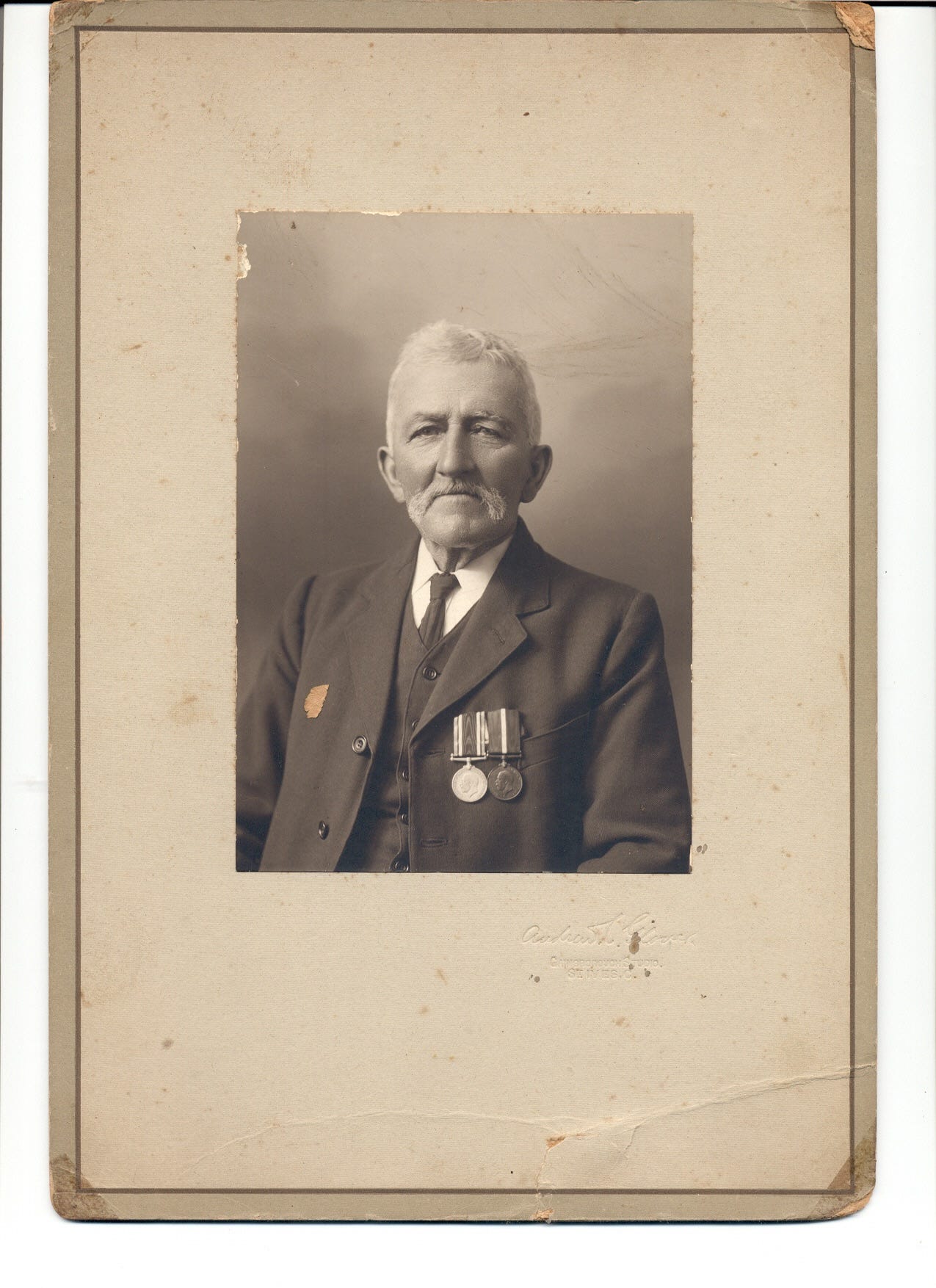
Great-grandfather John Roach
I had expected the 50% Cornish and Lancashire ancestry to translate into 50% English DNA. Wrong again. It seems that they were a more diverse bunch than my research suggested, with a good dollop of Scottish and Welsh DNA. The 9% Breton was most likely contributed by wives of Cornish fishermen: before modern roads and railways, the Brittany coast was closer to Cornwall than the rest of England and there was much marriage between the two communities.
And surprisingly, only one eighth of my DNA ancestors were Dutch, despite my paternal grandmother’s Bosman surname. But as we have seen, many of Johanna Bosman’s ancestors on the female line were French Huguenots, who settled in the Drakenstein district already populated by French and German immigrants. Perhaps there is also a Danish wife hidden somewhere in here?
After receiving the test results, the ancestry site began sending me endless matches of DNA cousins from their database. I was hoping to meet the direct descendants of the 25 known great-uncles and great-aunts who were missing from my childhood. But alas. By far the most numerous suggestions were remote descendants of my Cornish great- grandfather’s cousins and their ancestors. Many distant Bosmans cousins were flagged, but no relatives bearing the surnames of my other grandparents— Lazarus, Roach or Pearce. This does not prove anything, except that the offspring on these lines are not much interested in genealogy. Or perhaps the male lines died out.
Only one of my DNA cousins has contacted me so far: a French male is who mysteriously related via the Lazarus line. It seems that he is no wiser than I about my great-grandparents’ past. So it goes…
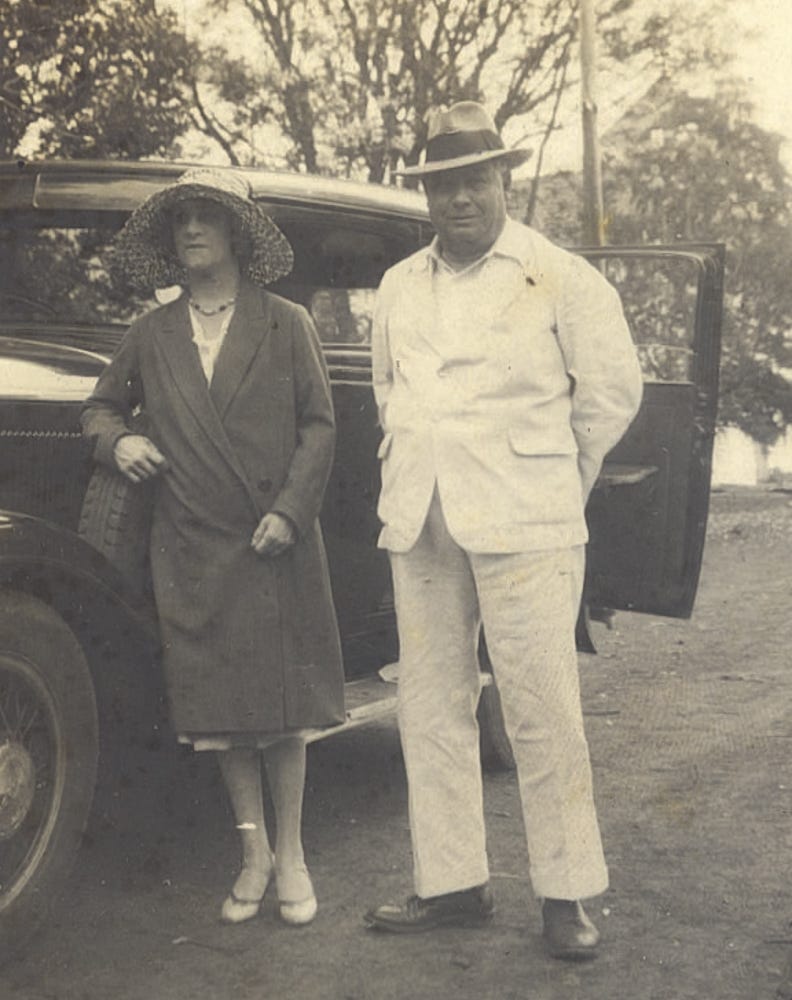
Grandpa and Joey Lazarus
The shade of the family tree
I have written previously about the formative influence of slavery (Peace wantonly disturbed) and the contribution of Victorian notions of racial superiority (Postcards) to shaping the country’s values. I see these trickling down the family line into my own nuclear family: we children were taught to refer to domestic workers as “the boy” and “the girl”, whatever their (and our) age. Like most white households the domestic workers lived in a backyard room and had their own food, crockery and cutlery. As one woman interviewed in Working Women said, “it is if I’m dirty, or she’s going to become black… I give you food like that, with my own hands, but you don’t want me to use your things.”
In the year I entered university, age 18 years, and “discovered” apartheid, these and other matters provoked a massive existential crisis, and I struggled to escape the shade of my family tree. But that is another story.
As I unearthed the untold stories of my forbears, I became fascinated by the possibility of an even more personal existential heritage. In particular, from my female working class ancestors who endured infant deaths and widowhood down the family line: Jessie Webber widowed at 30 years; her daughter Eliza-Jane Pearce widowed at 46 years; her daughter, my grandmother Mabel Roach, widowed at 51 years. All widowed by miners pthisis (Early doom). Did this long history of widowhood influence my own mother’s decision not to remarry after she was widowed at 45? How was I affected by living in a household with two single widows? Perhaps it had the perverse effect of assuring me that women can survive on their own.
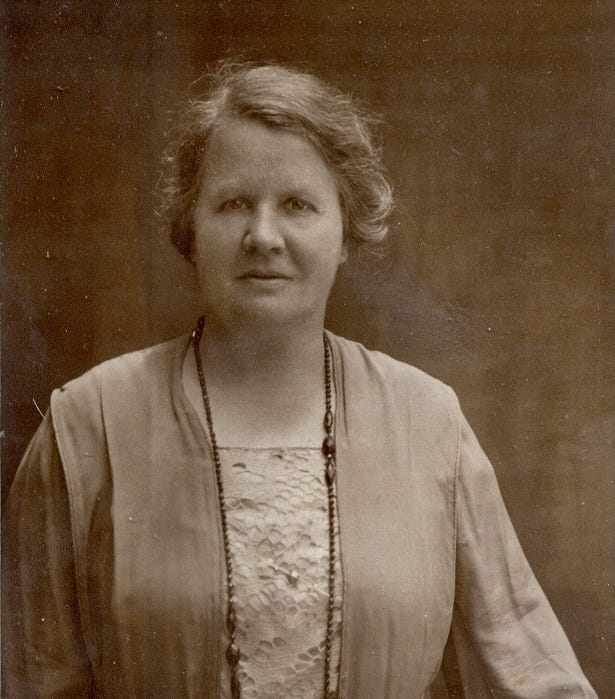
Great-grandmother Eliza-Jane Pearce
Much also has also been written about transgenerational trauma, and geneticists have even identified a mechanism by which this works. There are certainly times when I feel that I am the recipient of all this grief and melancholy down the ages.
Roots…
Three of my grandparents were first generation immigrants and when I moved to England on an ancestry visa in 1999, I had a notion that South Africa may have just been a blip in my family history. A failed colonial project. But how is it then, that after all these years, I am still “a South African living in London”?
When I first unearthed my Bosman grandmother, whose ancestors go back to the Huguenot of 1688, I wondered whether this past has rooted me in South African soil.
Sitting at my desk in London I dream of khakibos—that acrid spicy-smelling veld weed, so hard to eradicate. Its taproot just snaps at the weakest point, leaving a portion deep in the earth from which the plant regenerates. Research, however, shatters this fond metaphor: khakibos is not indigenous. A wild Latin American variant of the marigold, it was brought to South Africa in straw imported from Argentina to feed British horses during the Anglo-Boer war, and seeded across the land in their manure.
Even so, the ancestral roots idea does not ring true. Generations of my paternal grandmother’s ancestors were born and bred in the western Cape and have owned many of the vineyards that still exist today: Babylonstoren, Boschendal, The Grande Roche, Lelienfontein, Vrede en Lust to name a few. And yet, when I travel around the wine lands, I have no sense of belonging. The western Cape remains quite alien to me.
Likewise when I visit St Ives and Perranuthnoe where my Cornish forbears lived and worked, there is no resonance in my blood and bones.
Perhaps I am, at heart, a rootless soul: my identity of a more portable variety, carved not through ancestry or psychogeography but through life experience and meanings shared.
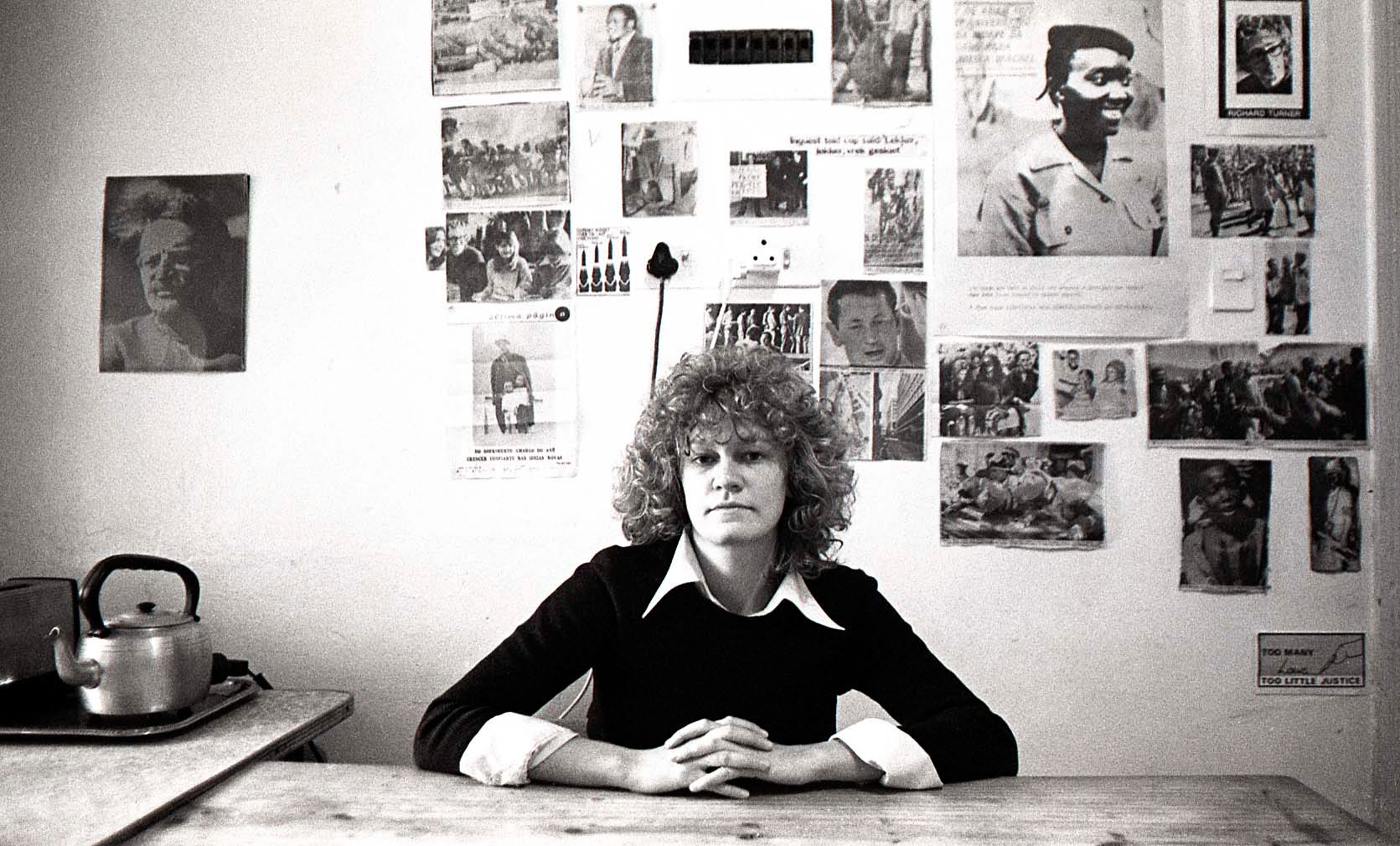
Self-portrait in kitchen, Crown Mines 1978.
Thank you for reading. This is the last in the current series. You can read all 26 episodes on my Substack page or on my website at https://www.lesleylawson.co.uk/missing-pieces. I am now working on Missing Pieces (the book) that combines my personal and family histories, so watch this space.
Great Les, interesting info x